Not All Connections Are the Same
As humans, we make connections throughout our lives. We have friends, family and colleagues. We build relationships with people we care about, people we work with and people who become part of our everyday lives.
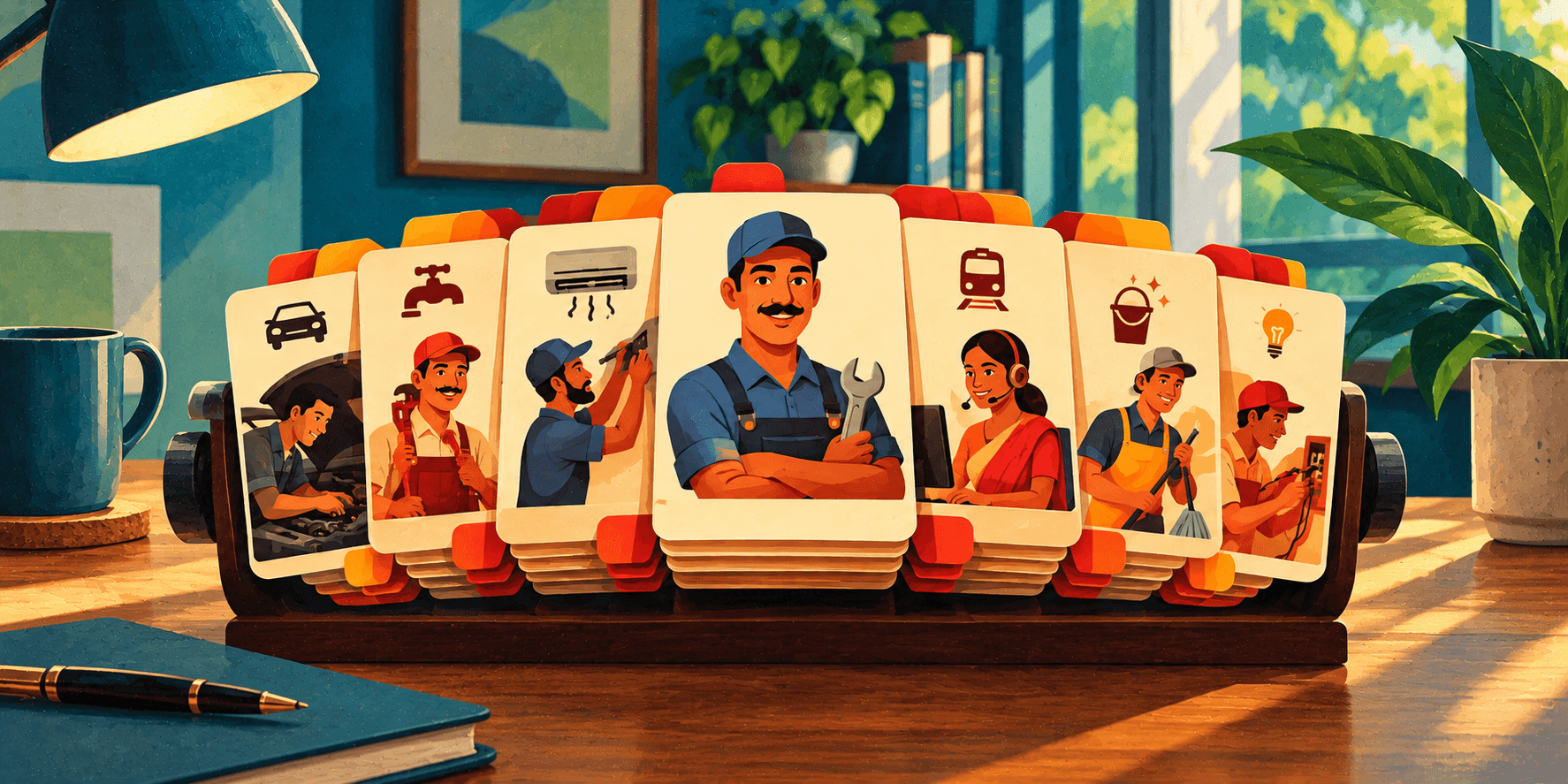
But there are other connections, too. The person who repairs our AC. The mechanic who looks after our car. The shopkeeper who sells us something we need. These relationships often begin with a transaction. We need something, someone provides it, and the exchange is complete.
Sometimes, however, these connections evolve into something more. We find someone reliable, learn to trust them, and gradually stop treating every interaction as a new decision. We no longer need to compare every available alternative because we have found something that works.
This got me thinking about the relationship between choice and confidence. We often celebrate having more options, but how much of that freedom do we actually need? And once we have found something we trust, why should we have to reconsider it every time?
Perpetual One Option Is Nirvana
Having lots of options feels like freedom. Reducing them to one brings peace of mind.
Every decision involves selecting one possibility and leaving the others behind. Before we can do that, we have to evaluate the alternatives, understand the trade-offs and decide which one best serves our needs. The more alternatives we consider, the more effort we may have to invest in making that choice.
That effort isn't always wasted. When we're unfamiliar with something, exploring our options helps us discover what works. But once we've found a reliable solution, repeatedly evaluating the same alternatives can become an unnecessary mental burden.
I've reached a point where I don't actively search for alternatives every time I need to buy rice, shirts or shoes. I've found options that work for me, and I return to them.
Perpetual one option is nirvana. Not because there is only one good choice, but because you no longer have to keep making the same choice.
Three everyday experiences have helped me understand this in different ways.
Rice: When You Trust the Person
I travel by road through Punjab about twice a year. On one of those journeys, we stopped in Taraori, an area with many shops selling rice. After buying rice there a couple of times, we met Sunny, a seller whose rice we liked. We kept his details and returned to him on subsequent trips.
Today, I call Sunny before arriving and tell him roughly when we'll reach his shop. When we get there, we catch up over tea before discussing how much rice we need. We might ask for 20, 25 or 30 kilograms. We don't inspect the varieties or compare the available options. We trust him to select the right rice, load it into our car and take our payment.
That trust developed through repeated good experiences. We also have a relationship beyond the transaction. I once added his shop to Google Maps to make it easier for me to find him. The listing brought him customers, and when he moved his shop again, he asked me to add the new location.
What began as a straightforward purchase has become a relationship in which both of us recognise value beyond the immediate transaction.
I could visit another seller who claims to offer the same rice for ₹5 less per kilogram. But the saving isn't worth the uncertainty for me. I already know Sunny's rice is good, and I trust him to choose it for me.
I don't need more options. I need the confidence that the person making the choice on my behalf will get it right.
Shirts: When a Business Understands Your Needs
Before moving to Delhi, I went looking for shirts and visited several brands. At the time, I wore size 46. I noticed that many stores offered a wide variety in sizes 40 and 42, but the selection thinned out considerably at 44. At size 46, there might be just two or three shirts tucked away in a corner.
Technically, those stores stocked my size. But I didn't feel that my needs had been genuinely considered.
Then I went to Zodiac. What struck me was that the range available in size 46 was comparable to what the store offered in smaller sizes. I felt seen, acknowledged and respected.
It reminds me of a restaurant that specialises in nihari but serves a mediocre dal to accommodate the one vegetarian in a group. The restaurant has provided an option, but it hasn't necessarily made a serious effort to serve that customer well.
That was how the selection at many shirt stores felt to me. My size was accommodated rather than genuinely served.
Zodiac offered a different experience. It demonstrated that my needs deserved the same attention as those of other customers.
This is a different kind of confidence from the one I have in Sunny. With Sunny, I trust a person to make a good choice. With Zodiac, I found a business that had already done the work of understanding what customers like me needed.
Shoes: When the Product Consistently Delivers
I discovered the factory outlet of M&D Footwears in Noida. The company used to make shoes for Lee Cooper, and I found its shoes to be excellent value for money. They were economical and lasted a long time.
After trying them, I stopped treating buying shoes as a decision that needed to be revisited every time. When I need shoes, I usually go to the same shop.
That doesn't mean I never buy shoes elsewhere. If I see something I like, I might buy it. But I no longer feel the need to search the market every time I need a pair.
The distinction is important. I haven't lost the freedom to explore alternatives. I've simply stopped feeling obliged to explore them.
In this case, I don't need a long-standing personal relationship or someone to make the choice for me. The product has earned my confidence by consistently delivering what matters to me: value for money and durability.
Different Paths to the Same Outcome
These three experiences are different, but they lead to a similar place.
With Sunny, I trust a person to choose the rice. With Zodiac, I found a business that genuinely considered my needs. With M&D Footwears, I found a product that consistently delivered the value I expected.
In each case, I reached a point where I no longer needed to evaluate every alternative whenever the need arose.
There is a common misconception that more options automatically create a better experience. But the number of alternatives available to a customer tells us very little about whether those alternatives are useful, whether the customer can confidently evaluate them, or whether the customer even wants to repeat that evaluation.
More options can be valuable when we are exploring something new. They can help us discover better products, compare providers and understand what matters to us. But once we have found something that works, the value of continuing to search may diminish.
We often make a decision because we want to stop making that decision. We choose a reliable mechanic so we don't have to search for one every time the car needs attention. We return to a familiar shop because we know what to expect. We rely on a trusted recommendation because someone else has already done part of the evaluation.
The decision becomes a default, and that default frees our attention for other things.
What This Means for Businesses
For businesses, this has implications beyond simplifying a product catalogue or reducing the number of steps in a purchase process.
The first is to understand whose needs you're designing for. A business can technically offer a product or service to a customer without genuinely serving that customer well. Zodiac stood out because it offered meaningful choice in my size, rather than treating it as an afterthought.
The second is to recognise that trust takes time. Sunny earned my confidence through repeated good experiences. A rating, a recommendation or a promise can help establish initial confidence, but consistent delivery is what turns that confidence into a relationship.
The third is to understand the value of predictability. When customers know what to expect and have good reasons to trust the outcome, they don't need to restart the decision-making process every time. They can return, confident that their needs will be met.
This doesn't mean businesses should try to eliminate all alternatives or encourage blind loyalty. Trust can become complacency, and a familiar choice should remain open to reconsideration when the experience deteriorates or circumstances change.
The opportunity is different: make the experience good enough, and consistent enough, that customers have a reason to return without feeling that they must compare everything again.
The goal isn't to give customers the fewest options. It's to earn enough confidence that they don't need to reconsider every option every time.
The Freedom to Stop Choosing
Having options gives us freedom. But freedom doesn't mean that we must keep every possibility open forever.
We explore, compare and experiment to find what works. Then, when we find something reliable, we should be able to settle into that choice without feeling that we are missing out simply because alternatives exist.
My relationship with Sunny, my experience at Zodiac and my discovery of M&D Footwears all remind me that confidence can be more valuable than endless choice. The source of that confidence differs: a trusted person, a business that understands our needs, or a product that consistently delivers.
In all three cases, the outcome is the same. I have found something that works, and I no longer need to spend unnecessary mental energy deciding where to go or what to buy.
Perhaps that's what we should aim for, both as customers and as businesses. Not to eliminate choice, but to make good choices easier to recognise, easier to trust and easier to repeat.
Because the real luxury isn't having an endless number of options. It's knowing that when you need something, you already know where to go.