
One of the most frustrating situations for any founder is seeing users sign up, try the product once, and then disappear. Marketing appears to be working. People are interested enough to create an account. They are curious enough to explore the product. Yet something happens between that first interaction and long-term adoption.
When this happens, most organizations immediately start looking for solutions. Marketing teams want to increase advertising spend. Product teams want to add more features. UX teams want to redesign onboarding. Leadership wants to know how competitors are retaining users. Everyone starts proposing solutions before fully understanding the problem.
This is understandable. Most people naturally look at problems through the lens of their expertise. A marketer sees a marketing problem. A product manager sees a product problem. A designer sees a UX problem. The challenge is that user retention is rarely caused by a single factor.
Users do not leave because a product lacks features. They leave because another solution feels easier, more familiar, more trustworthy, or better aligned with how they already work.
The Problem Usually Starts Earlier Than You Think
Many founders treat retention as something that happens after onboarding. I see it differently. By the time users decide whether to stay or leave, many of the factors influencing that decision have already been established.
Who signed up? Why did they sign up? What problem were they expecting the product to solve? What assumptions did they make before they ever created an account? Did the product deliver on those expectations?
These questions often matter more than button placement, onboarding screens, or feature counts.
Before building any product, there should be a discovery process. Every business exists to solve a problem. The critical question is not whether you can build a solution. The critical question is whether you understand whose problem you are solving and whether that problem genuinely exists.
When that understanding is missing, organizations attract the wrong users, build the wrong features, communicate the wrong value proposition, and eventually struggle with retention. The symptoms appear after signup, but the causes often originate much earlier.
Making Something Better Is Not Enough
Several years ago, I worked on a procurement platform designed for a specialized operational environment. The existing process was cumbersome and involved unnecessary complexity. We redesigned the experience and created a much simpler workflow.
On paper, the solution was clearly better. The process required fewer steps. Information was easier to access. Tasks were more structured and organized.
Yet adoption was slower than expected.
The breakthrough came when we stopped focusing on the application and started focusing on how people actually worked. We discovered that different stakeholders operated in different contexts. Some tasks naturally belonged on a desktop computer, while others happened almost entirely on mobile devices. Communication tools already played a significant role in their workflow.
Once the solution adapted to those realities rather than forcing users to adapt to our assumptions, adoption improved significantly.
Making a process simpler is valuable. Making it fit naturally into existing behavior is transformative.
That experience reinforced an important lesson. Users do not evaluate products in isolation. They evaluate them against the habits, tools, workflows, and expectations they already have.
Trust and Familiarity Matter More Than We Admit
Founders often assume customers make purely rational decisions. In reality, trust and familiarity play a significant role.
Consider how many products today offer similar functionality. In many categories, feature differences are relatively small. Yet customers consistently choose one product over another.
Why?
Because familiarity reduces risk. Trust reduces effort. People often return to products they already know because those products have earned credibility over time.
This is one reason why newer products frequently struggle despite having technically superior features. The competition is not only functionality. The competition is habit.
A product that understands a user's mental model and aligns with existing expectations often feels easier to use than a product that requires users to learn an entirely new way of thinking.
The Feature Trap

One of the most common mistakes I see is the belief that retention problems can be solved by adding more features.
Low engagement leads to new features. Low adoption leads to more options. User complaints lead to additional functionality. Over time, products become larger, more complicated, and harder to understand.
Ironically, the very thing intended to improve retention often makes the experience worse.
Many successful products started with a simple promise and executed it exceptionally well. They focused on solving one problem effectively before expanding into adjacent areas.
Users rarely wake up hoping for more complexity. They want clarity. They want confidence. They want to achieve their goals with the least amount of effort possible.
Sometimes the answer is not adding something. Sometimes the answer is removing something.
A useful measure of success is not always the amount of time users spend inside a product. In many situations, the opposite may be true. If a user can complete an important task faster and with less effort, the experience is often better.
The goal is not to maximize activity. The goal is to maximize value.
Users Resist Change Until They See Value
Another common misconception is that users resist change.
They do. But only temporarily.
People often react negatively when familiar experiences change. Every major redesign generates criticism. Every workflow adjustment attracts complaints. Every new approach creates discomfort.
However, if the change genuinely improves outcomes, most users adapt surprisingly quickly.
The real challenge is not overcoming resistance. The challenge is ensuring that the value of the change is meaningful enough to justify the disruption.
Users are not loyal to old interfaces. They are loyal to outcomes.
The Real Reason Users Leave
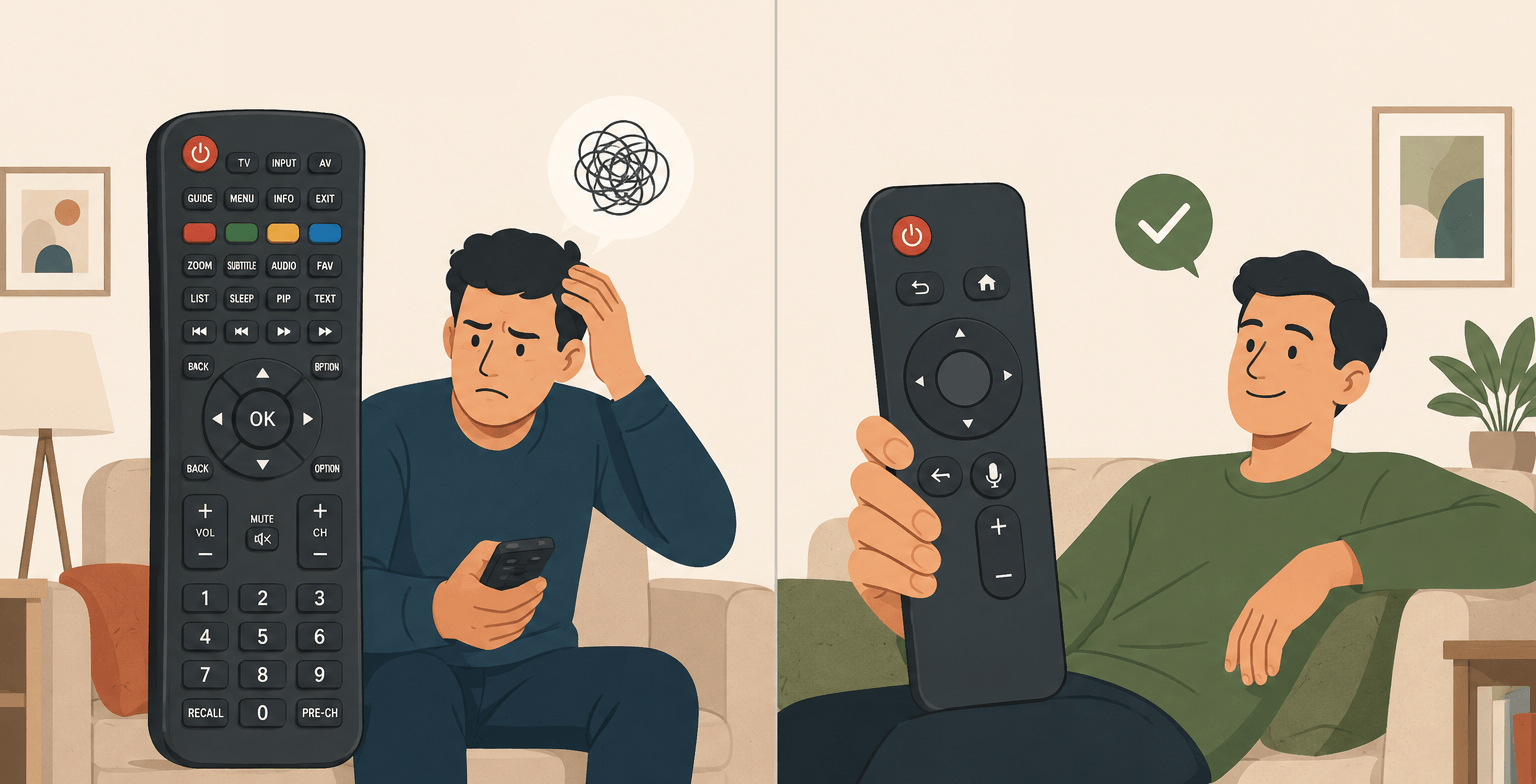
When users sign up and never return, the answer is rarely a single screen, feature, or campaign.
More often, they found another solution that was easier, more convenient, more familiar, more trustworthy, or better aligned with their needs.
Retention is ultimately a reflection of how well a product fits into the lives of the people it serves.
Founders sometimes fall in love with their products. That is understandable. Building something from scratch requires passion and commitment. The danger arises when personal preferences begin replacing user needs.
A simple analogy explains this well.
Imagine you are cooking for guests. You enjoy extremely spicy food, but your guests prefer mild flavors. If your goal is to create a great experience for your guests, you do not cook exclusively for yourself. You prepare something they will enjoy.
Products work the same way.
The product is not for the founder. It is for the customer.
The companies that retain users are usually not the ones with the most features or the largest budgets. They are the ones that understand their users deeply enough to create experiences that fit naturally into their lives.