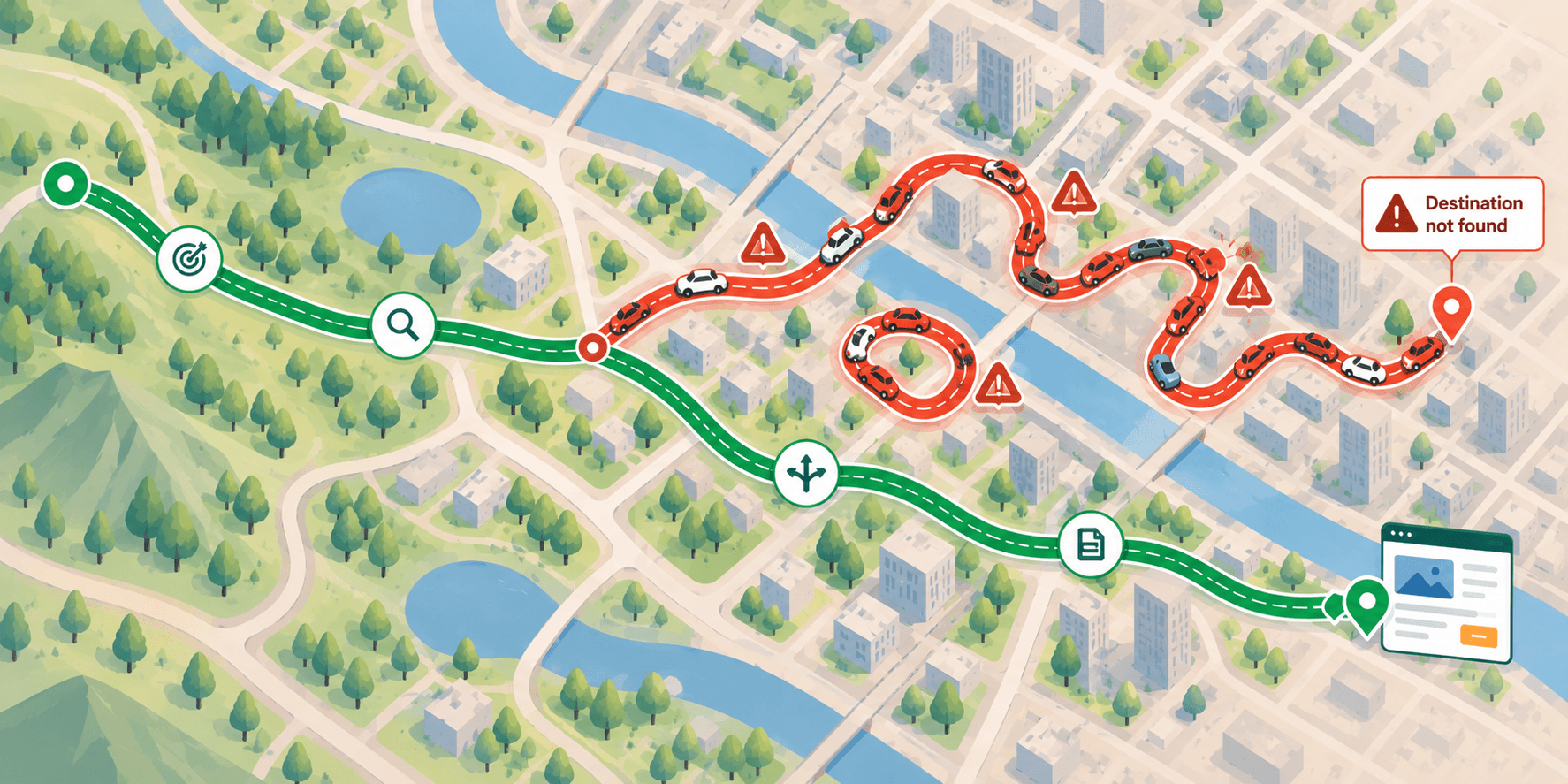
A redesign involves four distinct steps before the work on the interface begins.
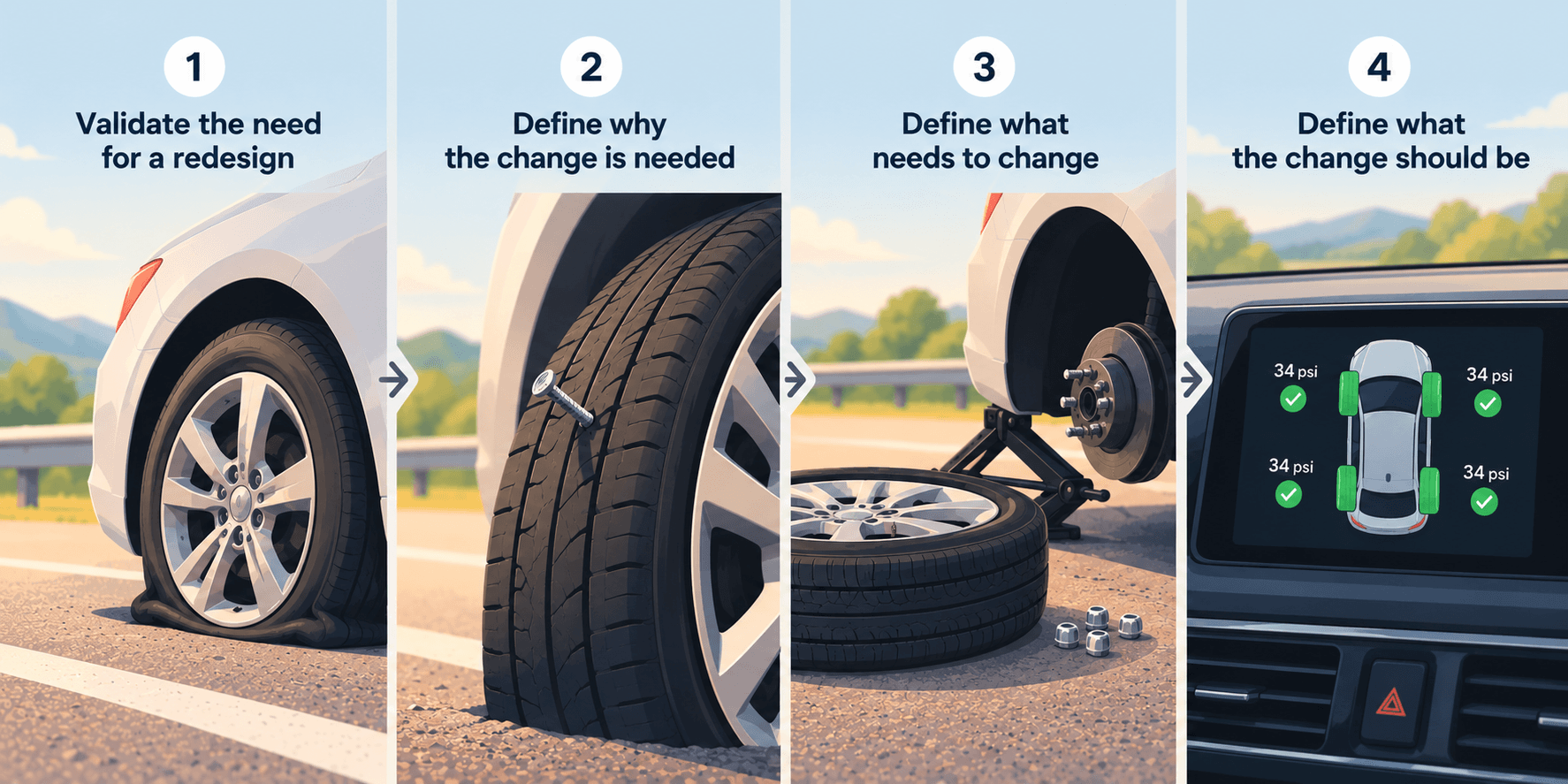
1. Validate the Need for a Redesign
A request to redesign a website is not the same as a clearly defined problem. Before accepting the request, we need to understand what isn't working, why it matters, and whether redesign is the right solution.
A friend who manufactures mushroom spawn once approached me because he wanted to redesign his website. As we discussed his business, I discovered that he was losing market share to smaller manufacturers. He also faced challenges delivering his products over greater distances because that would require refrigerated transportation.
Neither problem could be solved by redesigning his website.
We could have created a better website and still left his underlying business challenges untouched. The first responsibility was to understand the problem, not prescribe a solution.
A redesign is a proposed solution. Before investing in it, validate the problem it is supposed to solve.
2. Define why the change is needed
Once we establish that a redesign may be appropriate, we need to understand the problem it must solve. What isn't working? Who is affected? What does the business want to achieve? What should the experience accomplish that it doesn't accomplish today?
These questions help distinguish the underlying problem from the symptoms that first brought it to the team's attention. Without that distinction, the team risks improving visible elements without addressing what matters.
This work requires collaboration. Business leaders bring their understanding of commercial objectives, marketing teams contribute their knowledge of positioning and customers, and subject matter experts provide domain knowledge. The UX designer helps bring these perspectives together to develop a shared understanding of the problem.
3. Define What Needs to Change
Understanding the problem does not automatically reveal the right solution. The team needs to explore possible approaches, evaluate alternatives, and determine which changes are most likely to address the problem.
Consider a business that wants to improve how it presents its services. Before deciding how to redesign the service pages, the team needs to understand the problems those services solve, the customers they serve, and the value they deliver. If the service offering itself is unclear, changing the website's layout will not resolve that uncertainty.
I recently experienced this with a prospective client. We had discussed a website redesign, including the scope and price. The client later decided to spend the next four or five months working on marketing and defining his service offerings before returning to the website.
I was happy with that decision. I explained that understanding the problems his services solve, articulating the value they provide, and defining the offering were all part of what I considered redesign. The thinking required to shape the experience was not separate from the redesign; it was part of it.
The team must move beyond identifying what is wrong to determining what needs to be different. This means exploring options before committing to a particular solution.
Knowing what needs to change is not the same as knowing what to change it into.
4. Define What the Change Should Be
Once the team understands the problem and has identified the appropriate direction, it can define what the change should look like in practice. What should the new experience enable people to do? What information should it communicate? How should the different parts work together?
This is where the team translates its decisions into a clear direction for the design. The answers may include changes to the information architecture, content, interactions, functionality, and visual presentation. The specific changes depend on the problem, not on a predetermined idea of what a redesign should include.
An experienced UX designer brings structure to this process. They help the team frame questions, explore alternatives, evaluate ideas, and move towards decisions. They do not need to have all the answers or generate every idea themselves. Their value lies in helping the group reach informed conclusions through a deliberate, repeatable approach.
This is why UX should be involved when the need for a redesign is first identified, rather than after the requirements and solutions have already been decided. The designer's contribution extends beyond producing an interface to helping shape the decisions that determine what the interface needs to achieve.
Redesign Begins With Understanding
These four steps are not a rigid checklist. The depth of investigation depends on the problem and what the team already knows. Some questions may already have been answered; others may require further exploration.
What matters is that the team validates the problem, defines what needs to change, determines the appropriate direction, and establishes what the change should accomplish before committing to the design.
When a business says, "We need to redesign this website," that is the moment to start the redesign process, not the interface design.
The interface is where the redesign becomes visible. The thinking that makes it effective begins much earlier.
That is why a redesign starts much before the redesign starts.