
The CEO returns from an AI conference. The board wants an AI strategy. The CTO asks the innovation team to demonstrate progress within the next quarter. Suddenly, a team that was focused on solving business problems is now under pressure to build something involving AI.
This scenario is becoming increasingly common across organizations of every size. The problem is not the enthusiasm for AI. The problem is that many teams begin with a technology and then search for a problem. They create impressive demonstrations, working prototypes, and proof-of-concepts that showcase what AI can do. Unfortunately, many of these initiatives never become products because they fail to address a real business need, generate sustainable value, or operate within realistic commercial constraints.
The distinction matters. A prototype proves that something can be built. A product proves that something should be built.
The easiest part of building an AI company is getting the AI to work. The hard part is building a business that still works when the AI landscape changes.
If your goal is to create an AI product rather than an AI prototype, these five principles can help.
1. Start With a Problem, Not With AI
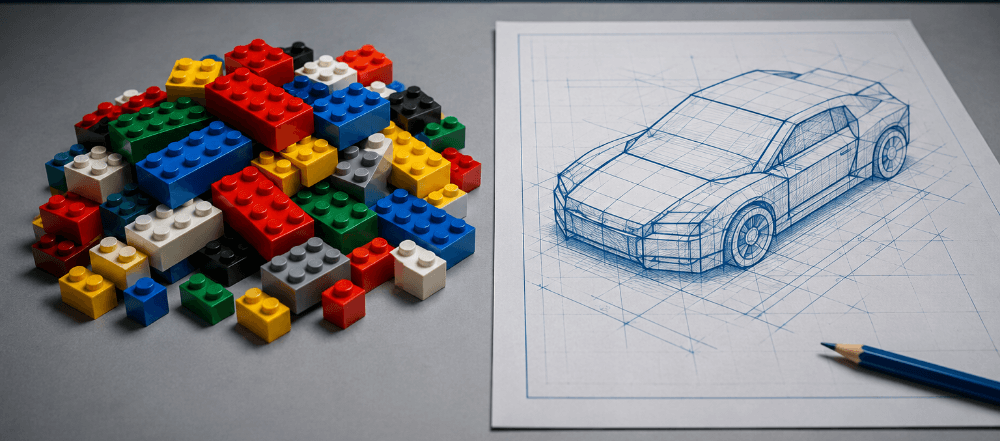
This is the most important principle because every other decision depends on it. The question should never be, "What can we build with AI?" The question should be, "What problem are we trying to solve?"
The most successful products solve a specific problem that customers already recognize and are willing to pay to address. AI should be introduced only when it enables a solution that is more effective, more efficient, faster, more scalable, or more accessible than alternative approaches.
Many organizations become fascinated by the capabilities of AI and forget to validate whether there is an underlying problem worth solving. The result is often a technically impressive demonstration that nobody uses because it does not meaningfully improve a customer's life or a business process.
AI is not the product. The value created by solving a meaningful problem is the product.
Before writing a single line of code, teams should be able to clearly articulate the problem, identify who experiences it, quantify its impact, and explain why AI is the most appropriate solution.
2. Build a Business, Not a Demo
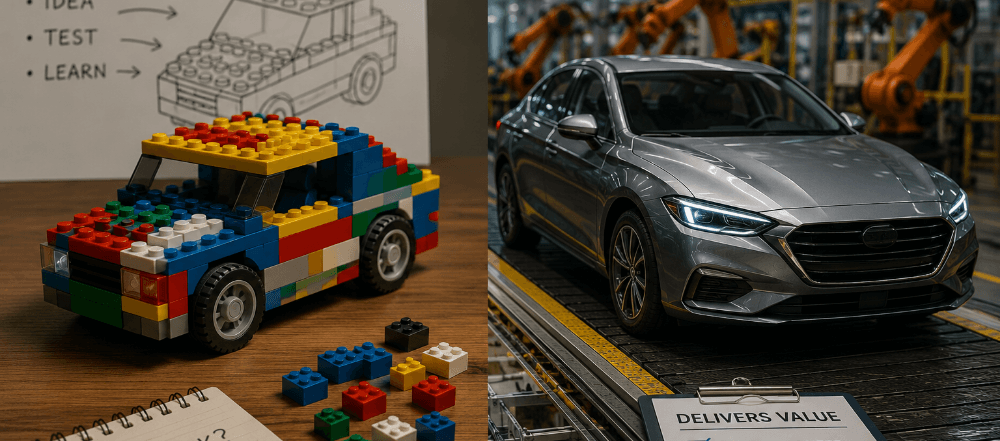
Many AI prototypes are successful because they are evaluated in controlled environments with limited usage and no commercial constraints. Products operate in a very different reality.
A product must have a sustainable business model. Someone must be willing to pay for it. The economics must remain viable as usage grows. Support costs, infrastructure costs, AI model costs, compliance requirements, and operational overhead all become significant factors once real customers enter the picture.
One of the most common mistakes in AI product development is underestimating operational complexity. A feature that appears profitable in a pilot project can quickly become expensive when thousands of users begin generating requests and consuming tokens.
Teams should evaluate not only whether AI can solve the problem, but whether the solution remains commercially viable at scale.
3. Build on a Strong Foundation, Not a Single Dependency
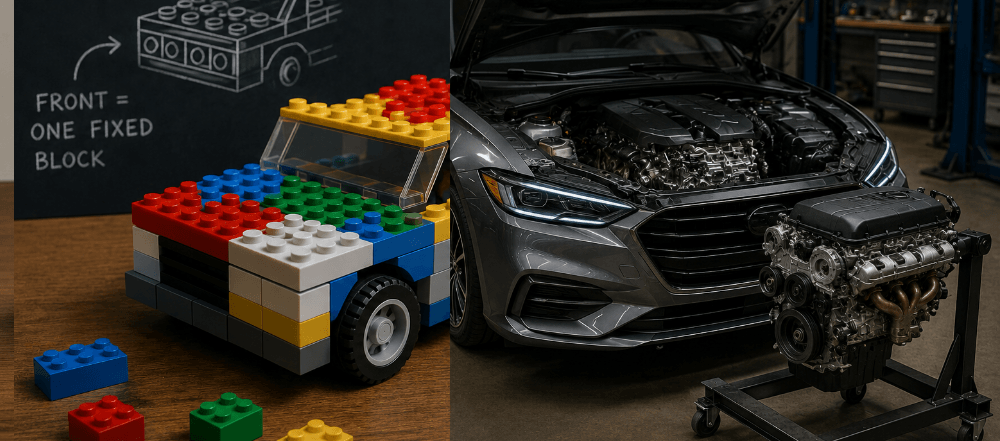
Every startup and innovation team has to start somewhere. In practice, many successful products begin by integrating with a single model provider or AI platform. There is nothing inherently wrong with this approach.
The risk emerges when temporary dependencies become permanent assumptions. Pricing models change. APIs evolve. New competitors emerge. Capabilities that once created differentiation become widely available.
The objective is not to delay progress while evaluating every possible vendor. The objective is to maintain flexibility. Teams should think carefully about architecture, portability, and contingency planning from the beginning, even if they initially commit to a single provider.
The strongest AI businesses are rarely defined by the model they use. They are defined by their workflows, domain expertise, customer relationships, and ability to create value regardless of which underlying technology provider they use.
Your competitive advantage should not be an API call. It should be the value you create around it.
4. Design for Operational Reality

A surprising number of AI initiatives assume that success occurs when the model produces the desired output. In reality, that is often where the hard work begins.
Products require governance, monitoring, security, quality assurance, compliance, user adoption strategies, and mechanisms for handling edge cases. They require processes for managing costs and maintaining performance as usage grows.
Organizations frequently discover that their AI challenge is not a technology challenge at all. It is a systems challenge. The model may work perfectly, but the surrounding business processes, workflows, and organizational structures may not be ready to support it.
The teams that succeed are those that treat AI as one component within a larger operational system rather than viewing it as a standalone solution.
5. Create Value That Survives Technological Change

The AI landscape evolves rapidly. Features that appear revolutionary today may become standard capabilities tomorrow. This reality creates an important strategic question.
If your competitors gain access to the same models, the same infrastructure, and the same capabilities, what remains unique about your product?
Sustainable businesses build advantages that extend beyond the underlying technology. They develop expertise in specific industries. They integrate deeply into customer workflows. They build trust. They accumulate proprietary knowledge. They create better user experiences. They solve problems in ways that are difficult to replicate.
These are the assets that continue creating value long after the latest model release loses its novelty.
Final Thoughts
Most organizations do not fail because they lack access to AI technology. They fail because they mistake technological capability for product strategy.
The organizations that create successful AI products are not necessarily those with the most advanced models. They are the ones that understand the problems they are solving, build sustainable business models, manage dependencies carefully, prepare for operational realities, and create value that endures beyond any single technology cycle.
The future belongs not to the teams that build the most AI prototypes, but to the teams that build products customers genuinely need.