When I started my career as a designer, I had little patience for process. If someone asked me how long a design would take, my answer was usually some variation of, "It will take as long as it takes." At the time, that seemed perfectly reasonable. Design was a creative activity, and creativity could not be scheduled. You explored, experimented, discarded ideas, started over, and eventually arrived at something that felt right.
Looking back, I realise I wasn't entirely wrong. Exploration is an essential part of creative work. The mistake was believing that exploration and process were mutually exclusive. I saw process as a constraint on creativity rather than something that could support it.
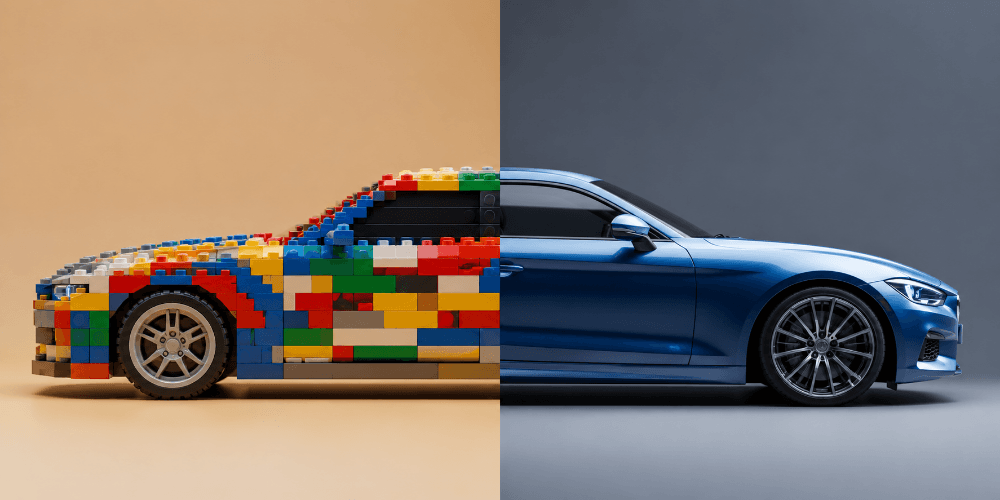
The biggest misconception I had early in my career was that creativity and process were opposites. Experience taught me that they solve different problems.
Ironically, the work I produced during those years was often well received. Clients appreciated it, and I enjoyed solving difficult problems. The issue wasn't the quality of the outcomes. The issue was the unpredictability of getting there. Sometimes I would arrive at a solution within hours. Other times I would spend days exploring different directions before finding one that worked. Every project felt like starting from the beginning.
In hindsight, I wasn't following a process. I was increasing my probability of success by trying enough ideas. If I kept exploring long enough, I would eventually reach a good solution. That approach worked, but it came with a hidden cost: every project demanded the same level of cognitive effort because I was constantly reinventing the wheel.
The Cost of Reinventing the Wheel
The turning point wasn't a single project or a dramatic moment of insight. It was the accumulation of experience. Over time, I began to feel the fatigue of relying entirely on inspiration. Every new assignment required the same mental intensity. Every blank canvas demanded that I rediscover my own thinking before I could solve the problem.
At the same time, I started paying closer attention to organisations that consistently produced excellent work. They weren't relying on moments of inspiration. They had structured ways of understanding problems, exploring ideas, validating assumptions, and refining solutions. Whether they followed Design Thinking, Double Diamond, Design Sprints, or another framework wasn't the important part. What mattered was that they approached complex problems systematically.
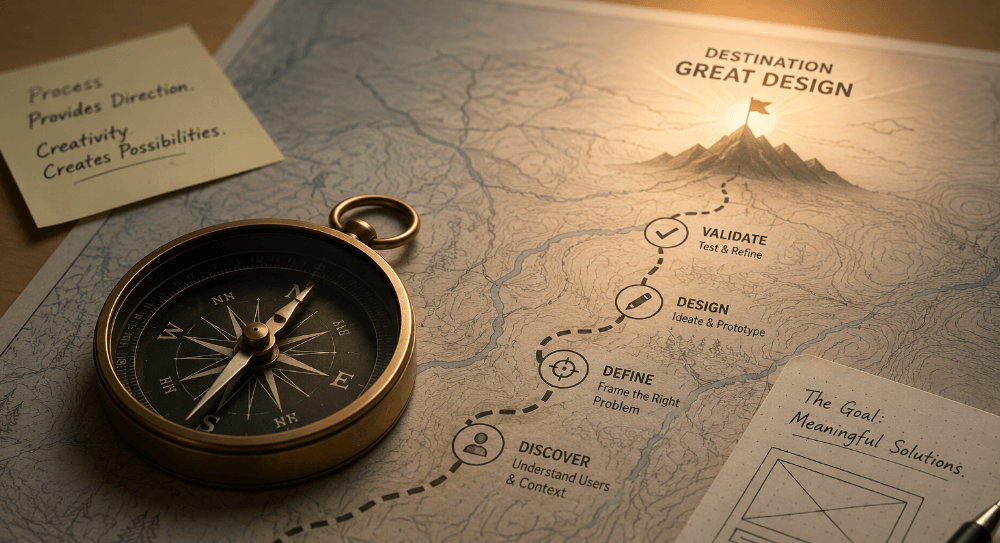
That observation changed my perspective. I realised that process wasn't there to tell designers what to create. It existed to remove unnecessary uncertainty from the journey.
A design process doesn't create creativity. It creates enough structure for creativity to be applied where it matters most.
What a Process Actually Does

Today, I think of a design process as the rails beneath a train. The rails don't decide the destination, and they certainly don't determine what the journey will look like. They simply provide a stable path that allows the train to move efficiently toward its destination.
The same is true of design. A process doesn't guarantee a brilliant outcome. Two experienced designers can follow the same process and produce entirely different solutions, both of which solve the problem effectively. Design remains a creative discipline, and creativity remains subjective. There is rarely a single perfect answer to a design problem.
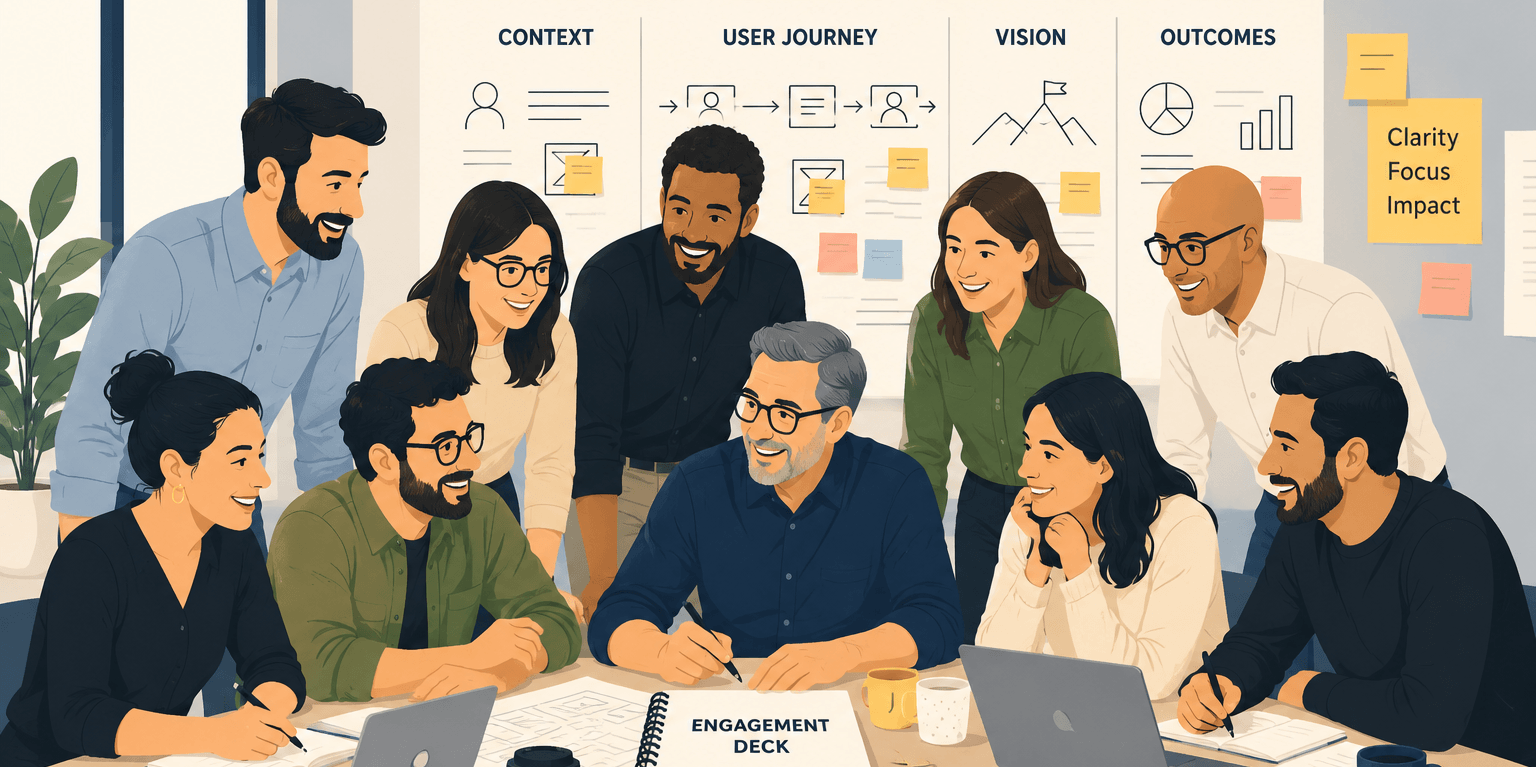
What a process does provide is clarity. It encourages you to understand the problem before solving it. It prompts you to validate assumptions instead of relying on intuition alone. It helps you estimate effort with greater confidence because you know what activities lie ahead. Most importantly, it reduces the number of unnecessary decisions that drain creative energy.
Process Improves the Odds, Not the Outcome
One of the reasons some designers resist process is the fear that everyone will end up producing the same work. I once believed that too. Experience has convinced me otherwise.
A process is not a formula. It is a framework for thinking. Following the same process does not eliminate originality any more than following the same recipe makes every chef equally talented. A skilled designer will still produce stronger work than an inexperienced designer because judgment, taste, experience, and problem-solving ability cannot be replaced by a checklist.
What process does is improve the probability of success. It helps good designers work more consistently. It helps less experienced designers avoid common mistakes. It creates predictability without eliminating creativity.
Process doesn't guarantee great design. It increases the likelihood of reaching a good solution while reducing unnecessary uncertainty.
Knowing When to Adapt the Process

Believing in process doesn't mean following every step on every project. That's another misconception.
The purpose of learning a design process is to understand why each stage exists. Some projects require extensive discovery because the team is entering unfamiliar territory. Others involve experienced product teams with years of customer knowledge, making parts of discovery unnecessary or significantly shorter. Some projects demand multiple rounds of validation. Others are incremental improvements where the direction is already clear.
Experience is not about following a framework mechanically. It is about exercising judgment. The more you understand the purpose behind each activity, the better equipped you are to decide whether it adds value in your current context.
This is also why I don't advocate a single design framework. Whether you use Double Diamond, Design Thinking, Design Sprints, or another structured approach is less important than having a thoughtful way of moving from understanding a problem to delivering a solution. Different teams, organisations, and products require different approaches.
Choosing Your Design Process
If you're new to UX or product design, one question naturally follows: Which design process should I learn? The good news is that there isn't a single correct answer. Over the years, the industry has developed several excellent frameworks, each designed to address different kinds of problems and organisational contexts. The framework itself is less important than developing a structured way of thinking about design.
Some of the most widely used approaches include:
- Double Diamond – A structured approach that separates understanding the problem from designing the solution. It encourages teams to explore broadly before converging on the best direction.
- Design Thinking – A human-centred approach that focuses on empathy, ideation, experimentation, and iterative learning. It works particularly well when solving complex problems involving people and behaviour.
- Design Sprint – Popularised by Google Ventures, this process compresses discovery, ideation, prototyping, and validation into a focused workshop, making it useful for quickly testing ideas before investing heavily in development.
My advice is simple: don't spend too much time trying to find the "best" process. Pick one, understand why each stage exists, and use it consistently. As your experience grows, you'll naturally adapt, combine, or simplify different approaches based on the context of each project. Ultimately, great designers aren't defined by the framework they follow, but by the quality of the thinking behind it.
Process Should Never Become the Product
Over the years, I've become a strong believer in process, but I've also learned that process has limits.
Every creative discipline begins with experimentation. As the discipline matures, it develops conventions, frameworks, and proven practices. Those advances improve quality and consistency, but they also carry a risk. When people begin following the process simply because "that's how it's done," the process stops serving creativity and starts replacing it.
A process is a means to an end, not the end itself. It should help us think more clearly, collaborate more effectively, and solve problems with greater confidence. The moment it becomes more important than the problem we're trying to solve, it has outlived its purpose.
If I could give one piece of advice to younger designers, design leaders, and stakeholders alike, it would be this: don't confuse structure with restriction. A good process isn't there to limit your creativity. It's there to ensure that your creativity is directed toward solving the right problem, in the most effective way possible.