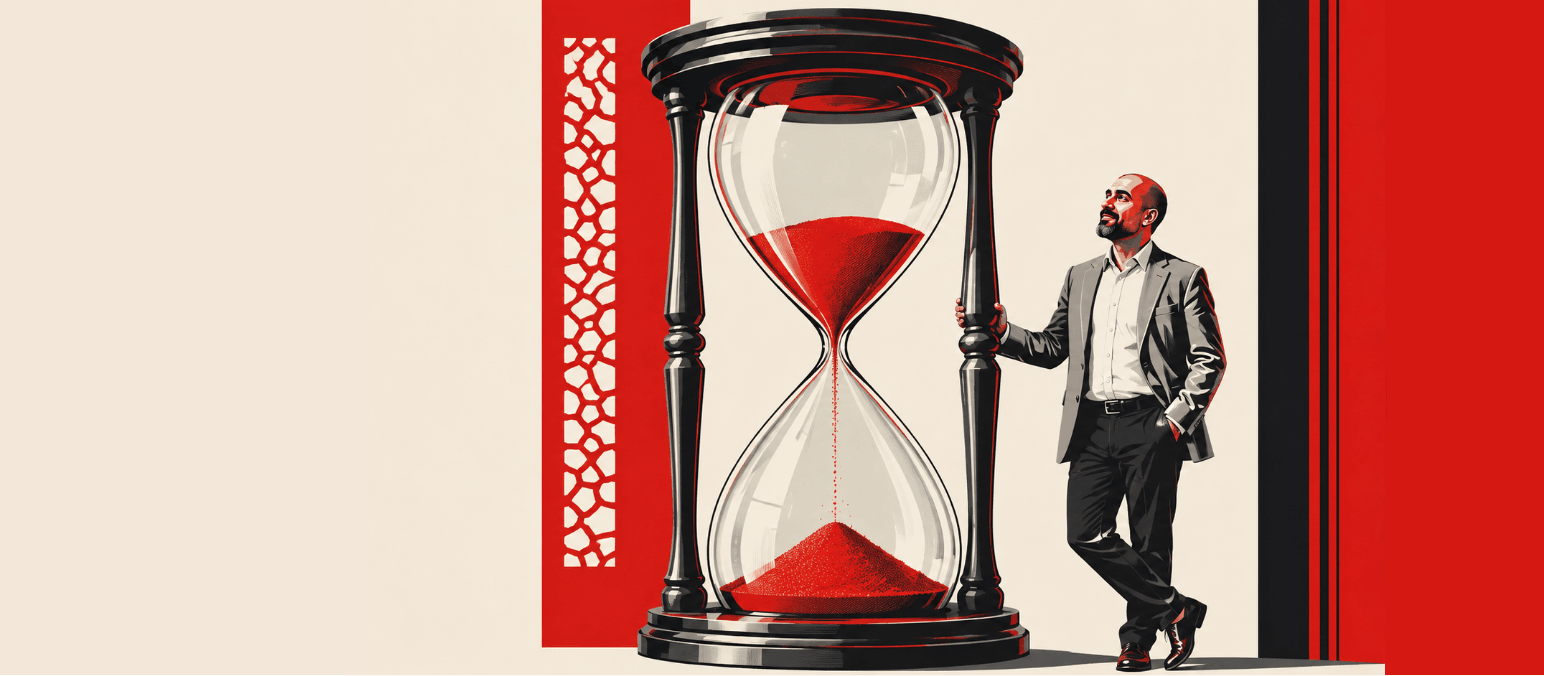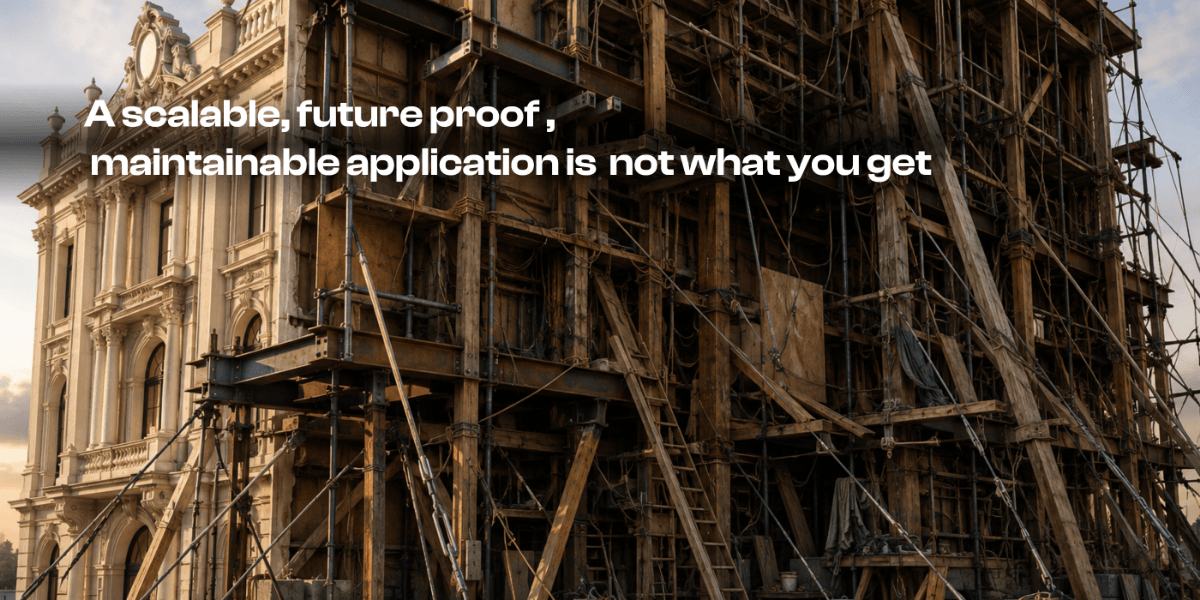

If you've spent any time around product teams recently, you've probably heard the phrase AI debt. Sometimes it refers to technical debt. Sometimes it refers to poor-quality AI-generated code. Whatever the definition, the concern is the same: teams are shipping faster than ever, but are they creating products that will remain easy to evolve?
As a designer, I look at the problem differently.
For me, the bigger concern isn't the code AI generates. It's the design decisions AI generates on our behalf.
Design isn't how a product looks. Design is the collection of decisions that determine how a product works.
Every prompt can generate layouts, interactions, hierarchy, spacing, copy, states, behaviors and implementation details. Individually, these decisions often look reasonable. Collectively, they can produce a product that becomes increasingly difficult to understand and maintain.
That's design debt.
The Speed Trap
AI has fundamentally changed the economics of creation.
A page that might once have taken several days can now be assembled in hours. Features that previously required knowledge of JavaScript, JSON or complex interactions can now be generated with a well-written prompt.
This is unquestionably valuable. My latest blog uses technologies that I would not have implemented on my own. Without AI, I probably wouldn't have attempted many of those features.
But that capability comes with a trade-off.
The more AI contributes, the more important it becomes to understand what it has produced. That understanding doesn't arrive automatically simply because the product works.
What AI Taught Me About My Own Process
One of the first things I learned was that asking AI to build an entire page rarely produces the quality I want.
Too many instructions compete for attention. Details are missed. Consistency suffers.
Instead, I build one section at a time.
Each section has its own HTML, CSS and JavaScript while I'm experimenting. If AI isn't getting a section right, I don't spend hours trying to rescue it. I remove the files, start again and build a better version using what I learned from the previous attempt.
That approach works remarkably well.
However, it introduces another problem.
Every new section tends to redefine existing styles. Headings are recreated. Paragraph styles reappear. Spacing rules are duplicated. Even after providing AI with the existing stylesheet and explicitly asking it to reuse what's already there, some duplication is almost inevitable.
By the end of the project, I perform an additional consolidation pass. I merge everything into a single stylesheet and ask AI to eliminate duplicate rules while preserving the intended design.
This isn't fixing AI.
It's governing AI.
AI is excellent at generating solutions. Designers are still responsible for maintaining the integrity of the system.
Why Design Debt Appears So Quickly
Traditional design projects accumulate debt gradually because every significant decision passes through the people building the product.
AI changes that equation.
Appearance, micro-interactions, content, component structure and implementation details can all be generated in minutes.
The result is that I make fewer individual design decisions than I once did.
That sounds like a productivity gain, and in many ways it is.
But it also means I spend less time building a mental model of the product.
Later, when something needs to change, I often have to rediscover decisions that I never consciously made in the first place.
That's where design debt starts becoming visible.
The Debt Isn't Just in the Code
It's tempting to think design debt is duplicated CSS or inconsistent components.
Those are symptoms.
The real problem is that the product gradually becomes harder to reason about.
As designers, we're responsible for ensuring that every interaction belongs to a coherent system. AI works extremely well on individual tasks. It has no inherent understanding of the integrity of the complete product unless we deliberately provide that context and continuously review the output.
The faster we generate, the easier it becomes to overlook inconsistencies that only reveal themselves months later.
What Has Changed for Me
One realization surprised me.
I completely understand my older website because every major decision was mine. It was smaller, technically simpler and limited by my own skills, but I knew exactly how it worked.
My current blog is objectively more capable.
AI helped me implement ideas that would otherwise have remained ideas.
At the same time, I no longer feel the same level of ownership over every implementation detail.
That isn't a criticism of AI.
It's a reminder that expanded capability and complete understanding don't always grow at the same pace.
How I'm Reducing Design Debt
- Build one section at a time instead of generating entire pages.
- Keep HTML, CSS and JavaScript modular while experimenting.
- Treat unsuccessful generations as disposable rather than endlessly patching them.
- Provide AI with the existing design system so it can reuse established patterns.
- Perform a final consolidation pass to remove duplication and restore consistency.
- Review the product as a system, not just as a collection of successful prompts.
The faster AI helps us build, the more disciplined we must become about maintaining design integrity.
AI has changed the way we create products.
It has not changed the responsibility of designers.
Our job is still to make intentional decisions, maintain coherent systems and ensure that today's shortcuts don't become tomorrow's constraints.
AI accelerates development.
Whether it also accelerates design debt depends on how we choose to work with it.